
The rapidly changing landscape of AI sales has a major transition year in 2026. The days when simple chatbots could perform only routine tasks such as responding to frequently asked questions have passed, and autonomous sales engine is on the rise. With the growing competitiveness in the market, businesses now need these advanced tools to help deal with budget restrictions and increased customer demands.
Comparing the process to the shift from riding a bicycle to using an electric scooter, chatbots can be viewed as the former, while autonomous sales engines can represent the latter. They not only allow you to get where you are going, but also speed up your journey and avoid all possible difficulties and pitfalls on your path. According to Gartner, in 2027, 80% of B2B sales engagements will involve autonomous AI agents—a number that will increase from just 20% now.
The Limitations of Traditional Chatbots
Chatbots gained massive traction from around 2016 due to their promise of providing round-the-clock service while saving costs. They shine in performing tasks based on rules – booking an appointment, telling you where your order is, or moving a ticket along. However, they struggle in handling complicated sales situations.
- Stagnant Dialogues: Almost all operate within pre-set paths, which can be highly disheartening for clients who don’t adhere to the set pathways.
- Inability to Be Sensitive to Context: They do not possess the capability to recall previous conversations unless programmed explicitly, thereby missing out on opportunities to make things more personal.
- Proactive Inability: They are always passive and never make efforts to start communicating before customer intervention.
- As per the research by Forrester, around 62% of customers would stop interacting with bots by the year 2025 due to their inability to offer relevant information, thereby costing companies millions of dollars in lost sales. The sales representatives become reactive to fill the gaps of the chatbot.
Enter Autonomous Sales Engines
ASAs utilize the Chatbot Technology already present but adopt the principle of autonomy. Through the use of LLMs such as GPT-4o and Multimodal AI Technology, they operate autonomously through behavior analysis, prediction of needs, and multi-stage processing.
Core features include:
Lead Scoring and Qualification: Based on the data from their website visits and e-mail opens, the tool analyzes the behavior and actions of the leads.
- Personalized Communication: With chat, e-mail, and SMS methods, the bots communicate with leads depending on their emotional state.
- Negotiations and Closing: Applying the reinforcement learning technique, the bots answer queries and provide discounts, sales contracts, etc.
- Learning & Adaptation: From every interaction, they learn and adapt from their behavior, transforming into more skillful salespeople with every sale made. To illustrate, take the example of a SaaS product, say the software for project management.
- The independent engine notices that the visitor is browsing through the pricing page, discovers the number of employees by visiting LinkedIn, and sends an alert on Slack that says, “I noticed that you are searching for project management software for your 50-person firm.
- Let me show you how our platform reduces the onboarding time by 40% in companies of the same size. Free trial?” If there is any engagement, the bot qualifies their pain points, demonstrates their product via screen sharing, and closes the deal with a single click registration. The Technology Behind the Change
Real-World Tech Powering the Shift
This isn’t sci-fi. Platforms are already delivering these capabilities through integrated stacks:
| Feature | Traditional Chatbot | Autonomous Sales Engine |
| Initiation | Reactive (user initiates) | Proactive (AI identifies cues) |
| Decision-Making | Preset if-then rules | LLM-driven inference |
| Channels | Single (e.g., web chat) | Omnichannel (chat, email, voice) |
| Analytics | Basic logs | Predictive ML with ROI tracking |
| Human Handoff | Frequent escalations | Seamless, only for edge cases |
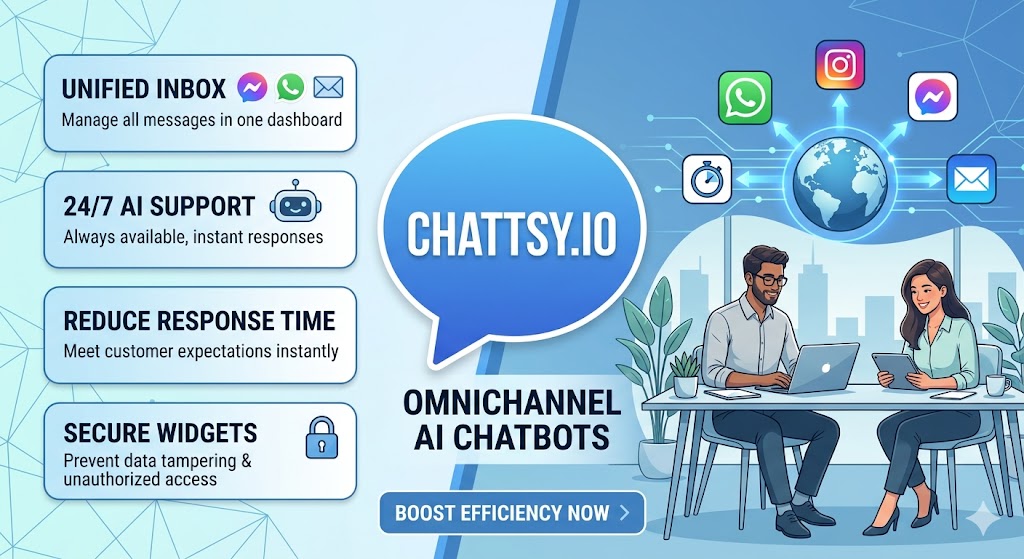
Chattsy is an example of this progression. The platform merges conversational AI and sales automation so that the system can independently handle the whole pipeline. This leads to three times quicker deal-making processes, as the platform deals with 70% of all interactions independently, allowing agents to focus on closing large deals.
Under the hood, technologies such as vector databases (for memory retention), agentic workflows (LangChain or AutoGen framework), etc., make this possible. This will be accomplished by 2026 via edge AI processing locally on-device, enabling very fast response times even in regions with limited bandwidth.
Implementation process by 2026
Time for an upgrade? Follow this practical guide:
- Stack Audit: Review your current chatbots’ performance relative to sales using Google Analytics or HubSpot data and determine where there are drop-offs.
- Engine Choices: Opt for engines that have non-coding building capacity, connect to CRM platforms (like Salesforce and HubSpot), and meet GDPR and CCPA standards.
- Training with Your Data: Feed in your historical conversation data along with wins and losses to optimize your algorithm. Most chatbot tools support one-click import of data.
- Try Out On A Limited Scale: Begin with a single sales funnel (for instance, demos) and conduct A/B testing of both the bot and the engine performance in terms of conversion improvement.
- Tracking and Improvement: Utilize dashboards for accountability and transparency.
Revenue growth in early adopters (as well as e-commerce companies) ranges between 25% and 40%. For instance, when a mid-sized retailer made plans to utilize autonomous engines, its conversion rates rose from 15% to 32%, resulting in additional annual revenues worth $1.2 million.
Challenges and Solutions
No technology comes without weakness
- Hallucinations: When AI generates imaginary data. Remedy: Train models using reliable information sources.
- Brand Voice Shifts: AI replies become generic. Solution: Develop your brand voice through custom training.
- Concerns over Data Protection: Risks of sensitive data exposure. Use secure technology providers with end-to-end encryption.
With the arrival of new policies, such as the European Union AI Act in 2026, ethical use of AI will be simplified.
The Future: Sales Teams Reimagined
Autonomous sales engines don’t mean replacing humans; they make them stronger. Sales reps become strategists who concentrate on building relationships and innovating. Imagine this situation whereby AI is busy crunching numbers while human beings look into the bigger picture.
Moving into 2026, companies that do not embrace the above phenomenon are likely to become obsolete in operation, but those adopting it will seal business deals more quickly and more satisfied customers.
Key Numbers on Autonomous Sales Engines
- Market Value: Market value of sales automation with artificial intelligence stands at $15B in 2026, growing at a yearly rate of 45% (Statista, Q1 2026).
- Adoption Rate: More than 65% of Fortune 500 firms adopt agentic AI in their sales process (McKinsey report, March 2026).
- ROI: Average increase in pipeline velocity of 28%; sales cycle duration reduced by 35% (HubSpot State of AI, 2026)
Chattsy-Specific Highlights
Chattsy is marketed as a no-code platform to build these engines:
- Main Functions: autonomous processes, omnichannel communication (WhatsApp, Slack, website), CRM integration (Salesforce, for instance), and sentiment analysis.
- User Wins: Case studies show 4x lead qualification speed; one e-com client boosted conversions 40% (from Chattsy’s site/blog).
- Differentiation: Advantage over rival vendors such as Intercom or Drift—In-built “Sales autonomy mode” with sales agents having goals rather than scripted content.
Helpful Guides on Live Chat Optimization
Live Chat Pricing: How Much It Really Costs (and Which Model Scales)
Pre-Chat Forms: What to Ask, When to Ask It, and How to Keep Conversions High